
6 easy ways to lower your fall risk
Following these basic strategies can help you stay independent and mobile.
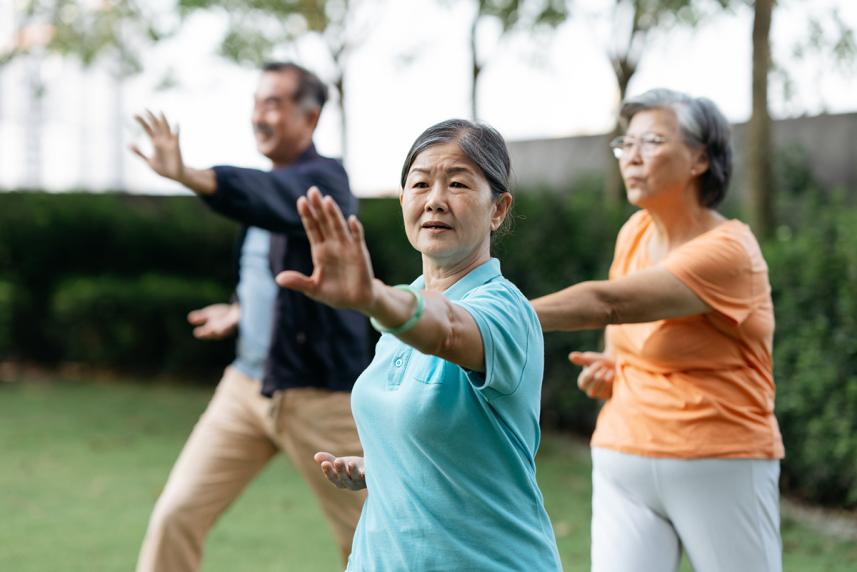
Feeling steady on your feet is one of the keys to staying active and independent. Even small changes in balance, vision, hearing, or strength can make slips more likely — especially on uneven sidewalks or wet walkways after rain. In fact, more than one out of four Americans age 65 and older fall each year, according to the Centers for Disease Control and Prevention (CDC). And of that group, 3 million end up in the emergency room.
The good news? A few simple habits can help you feel more confident and protected wherever life takes you.
To keep enjoying the people and activities you love safely, take these six smart steps to support your balance and mobility:
Step #1: Take a fall risk assessment
Your doctor can help you assess your risk of falls and make a prevention plan. Before your assessment, make a list of all the medicines you take, including any over-the-counter medications, vitamins, and supplements. Your doctor will want to go over them because many medicines, like those for high blood pressure and depression, may have side effects like dizziness that can increase your risk of falling.
Also remember to tell the doctor about any time you’ve fallen in the past year. It might be tempting to leave out the minor stumbles, wobbles and close calls you may have had, but don’t hold back. The CDC reports that falling once doubles your chances of falling again.
Step #2: Vary your exercise routine
Getting enough physical activity will go a long way toward helping you maintain strength, balance, coordination and flexibility, according to the Mayo Clinic.
And changing up your workouts appears to deliver the most benefits. Older adults who alternated between workouts that incorporated balance (like tai chi and yoga), and strength training (like lifting weights) had a 34% lower risk of falling than those who didn’t exercise at all, reports a study in the British Journal of Sports Medicine.
The most important part of planning a new fitness routine, though, is making sure to focus on activities you enjoy. Just be sure to check with your doctor before beginning any new exercise program.
Step #3: Keep up with routine vision and hearing checks
If your vision isn’t as sharp as it used to be, you’re more likely to trip over something you didn’t see well. Vision trouble can happen so gradually you don’t even notice it, so it’s important to have regular eye exams, according to the National Institute on Aging.
The role your hearing plays in keeping you on your feet is less obvious. Age-related hearing loss happens in your inner ear, which is part of your body’s balancing system that keeps you upright. Hearing loss can increase your risk of falling by causing you to take shorter, slower, more unsteady steps. So get your hearing tested regularly, too.
Step #4: Take a fresh look at your living space
Scan your home for tripping hazards like boxes, cords or awkwardly placed tables in high-traffic areas. If you have loose carpeting or floorboards, get them replaced.
It’s also a good idea to rethink how you organize items in your closets and cupboards. Ideally, you want to keep the clothes, food and other necessities that you use most often within easy reach. And finally, use nonslip mats in the bathtub or shower.
Step #5: Add more lights
To avoid tripping on objects that are hard to see in the dark, make sure your living space is brightly lit. Place night-lights in your bathroom and hallways. Keep the lamp next to your bed within reach. And get in the habit of turning on lights before taking the stairs.
Easy-to-install motion sensor lights are a great way to make sure you’ve got light when you’re on the move. You can find battery-operated wireless versions that stick on the wall.
Don’t forget to check the lighting outside your home, too. Add some lighting to any driveways, sidewalks or walkways that might be too dark at night.
Step #6: Stop multi-tasking
Learning to be more present during daily activities is a good way to avoid a fall. Meditative movement practices like yoga can help you get and stay centered. A small study from the University of Wisconsin-Madison showed that older adults who took yoga classes and practiced meditation daily for eight weeks reduced their risk of falls. Tai chi is another kind of mindfulness-based movement practice that can help you learn to pay attention to the present moment.
H3832_8750_1295101_3MDD2252_26_C | H8481_8750_1295101_3MDD2259_26_C
© 2025, Linkwell Health, Inc. All content owned or licensed by Linkwell Health, Inc. All rights reserved.